Konjac Dry Rice Rehydration Performance and Calorie Testing: Satiety Endurance vs. Keto Meal Replacement Powders
The health food industry is shifting how it evaluates meal replacement products—from conceptual marketing to parameter verification. As a zero-sugar, high-fiber staple alternative, the rehydration performance, caloric density, and satiety duration of konjac dry rice directly impact consumer experience and repurchase rates. This article provides a horizontal comparison between instant konjac rice and mainstream keto meal replacement powders based on lab data, delivering quantifiable evidence to help buyers and brand owners make informed decisions.
Rehydration Performance: Absorption Ratio and Time Curve
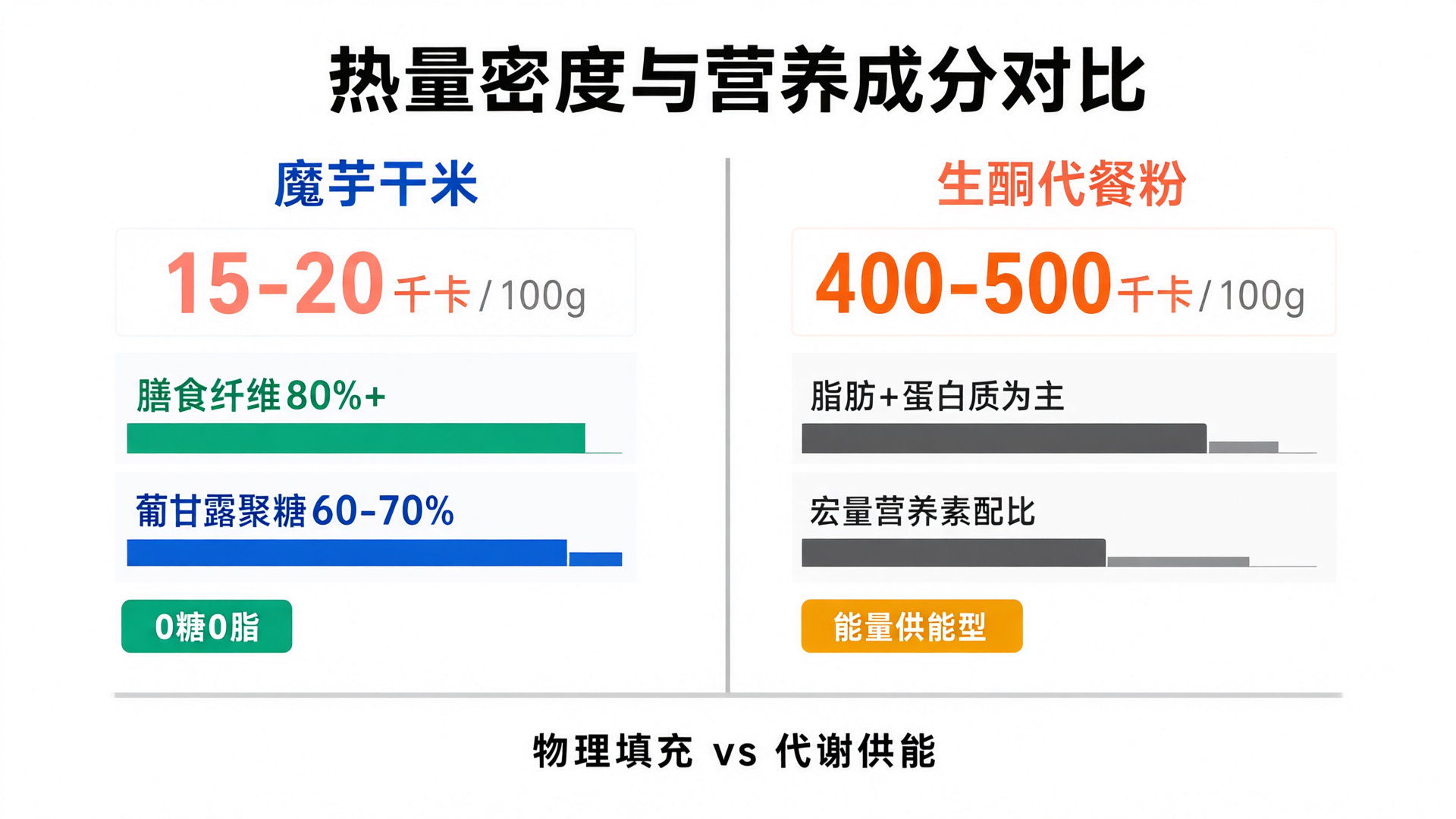
The key ingredient in konjac dry rice is glucomannan, a water-soluble dietary fiber with exceptional water absorption and swelling properties. Under standard test conditions (water temperature 85°C, soaking time 5 minutes), Moli Kuanliang instant konjac rice achieves an absorption ratio of 1:8. This means 1 grams of dry rice can absorb 8 grams of water, expanding to 6-7 times its original volume when rehydrated.
The rehydration curve shows that the first 2 minutes represent the rapid absorption phase, accounting for approximately 70% of total volume gain. From minutes 3 to 5, the product enters a slow saturation phase, with texture gradually shifting from a hard core to uniformly soft and glutinous. This characteristic ensures end-use convenience: consumers simply add hot water—no cooking required—to achieve a rice-like texture in just 5 minutes.
Compared to keto meal replacement powders, the latter relies mainly on protein and fat emulsions, turning into a paste or milkshake after rehydration without volume expansion. From a visual satiety standpoint, konjac dry rice more closely resembles traditional staple foods, making it better suited to Asian consumers' eating habits.
Caloric Density and Nutritional Composition
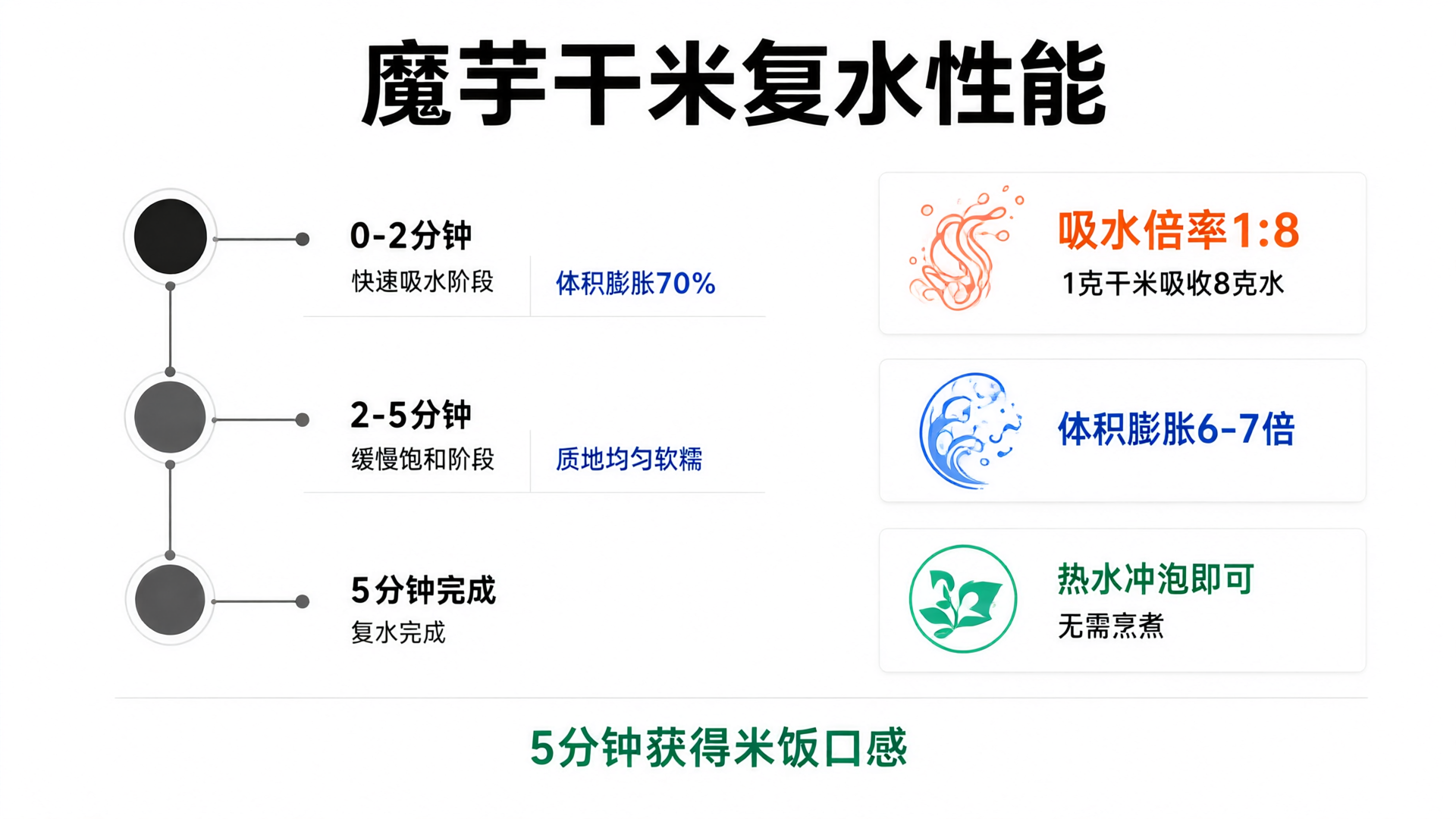
Calorie test results indicate that konjac dry rice has a caloric density of approximately 15-20 kcal per 100 grams (dry weight). After rehydration, each serving (made from approximately 30 grams of dry rice) contains less than 6 kcal. This low energy value is due to glucomannan's indigestibility and lack of absorption in the human body; it passes through the intestines intact, providing no metabolic energy.
Nutritionally, konjac dry rice contains over 80% dietary fiber, with glucomannan making up about 60–70% of that. The rest is moisture and trace minerals. It has no protein, fat, or carbohydrates—truly a zero-sugar, zero-fat food.
Keto meal replacement powders typically deliver 400–500 kcal per 100 grams, with calories primarily from fats (MCT oil powder, coconut oil powder) and proteins (whey protein, collagen). A standard serving (~35 grams) provides about 150–180 kcal, featuring macronutrient ratios as the key selling point.
The caloric difference stems from distinct design principles: konjac dry rice promotes satiety via physical bulk and fiber-induced intestinal expansion, whereas keto meal replacement powders sustain energy balance through the metabolic fuel provided by fats and proteins.
Satiety Endurance: Time-Dimension Comparison
The satiety test used a subjective scoring method (Visual Analog Scale, VAS). Participants consumed standard portions while fasting and recorded hunger scores every 30 minutes.
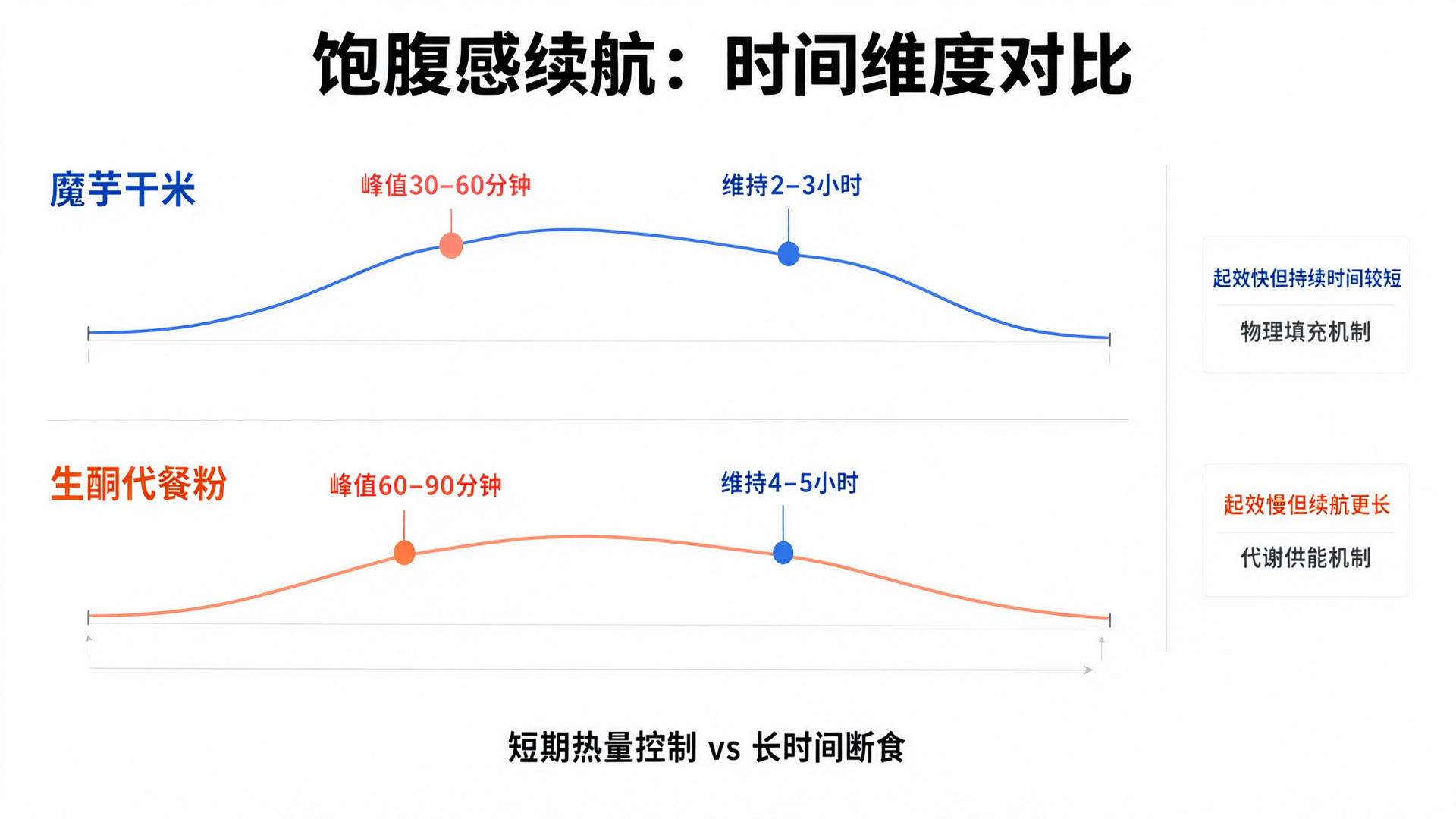
Konjac rice reaches peak satiety 30–60 minutes after consumption. At this point, glucomannan has fully absorbed water and expanded in the stomach, forming a gel that occupies gastric volume and triggers mechanical satiety signals. Satiety lasts approximately 2–3 hours before gradually fading as intestinal peristalsis continues. Subjects primarily reported "gastric fullness" rather than "energy sufficiency."
The satiety curve for keto meal replacement powders shows distinct characteristics. Because fats have a longer gastric emptying time (approximately 3-4 hours), the peak satiety occurs 60-90 minutes after consumption and lasts up to 4-5 hours. Participants described the sensation as "sustained energy release," with stable blood sugar levels and no significant hunger fluctuations.
The two products differ fundamentally in their satiety mechanisms. Konjac dry rice works through physical filling—acting fast but lasting briefly. Keto meal replacement powders rely on metabolic energy supply—acting slowly but with longer endurance. This distinction defines their ideal use cases: konjac dry rice is best for short-term calorie control and pre-meal appetite suppression, while keto meal replacement powders are suited for long-term fasting replacement and sustained energy support.
Application Scenarios and Supply Chain Capabilities
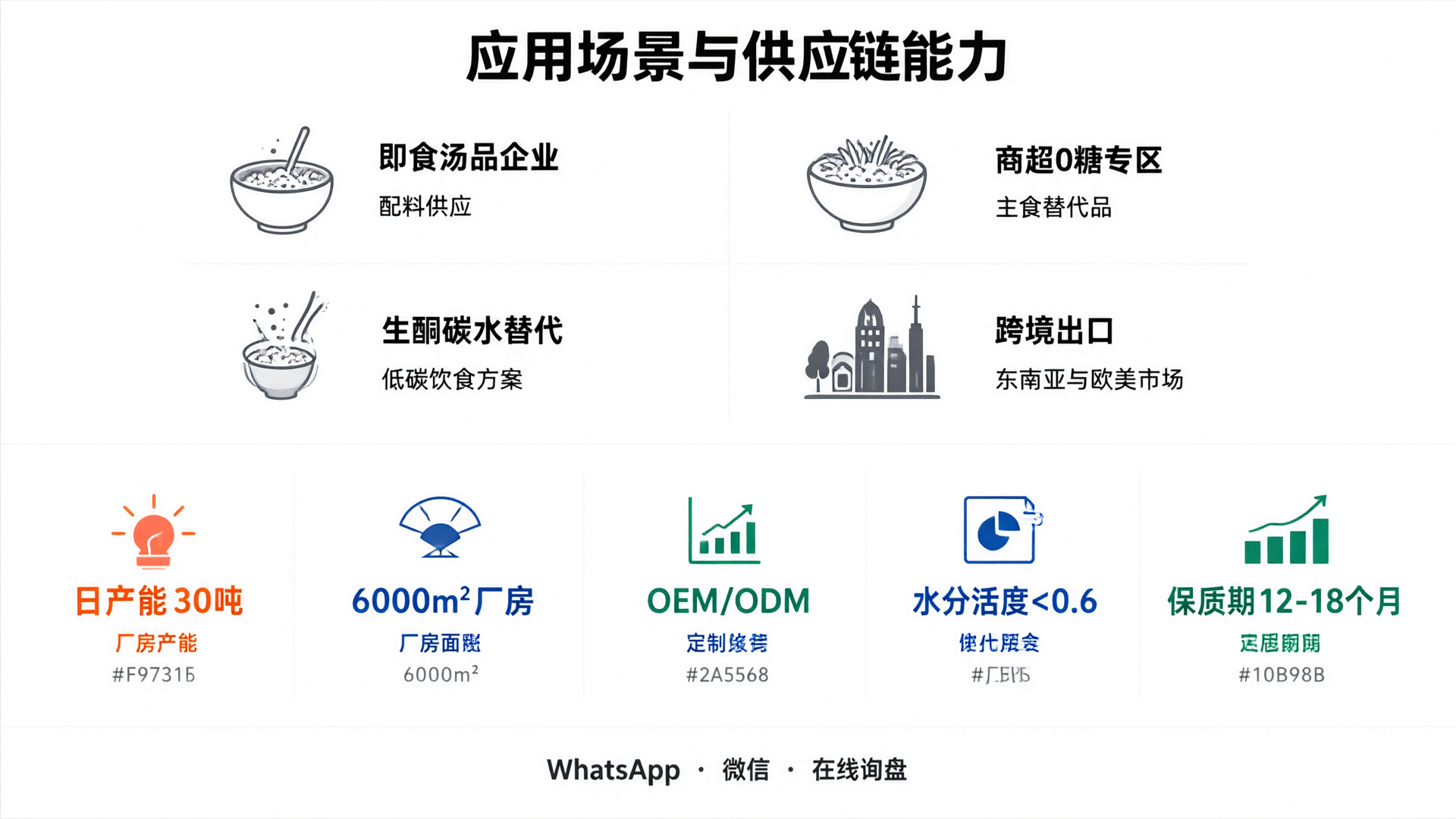
Konjac dry rice delivers competitive advantages in these scenarios: ingredient supply for instant soup manufacturers, zero-sugar staple food sections in supermarkets, carb-replacement solutions for keto dieters, and cross-border exports to health food markets in Southeast Asia, Europe, and the Americas.
As a konjac health food manufacturer, Moli Kuanliang offers end-to-end supply chain capabilities: daily output of 30 tons, a 6,000m² GMP-certified facility, full OEM/ODM customization, and complete cross-border export compliance. Our product line includes instant konjac rice, zero-sugar high-fiber instant konjac rice, instant konjac dry shreds, konjac noodles, and more—tailored to meet procurement needs across all sales channels.
Water activity control is the key parameter for shelf-life stability of konjac dry rice. Drying technology that reduces water activity below 0.6 extends shelf life to 12-18 months without preservatives, making it ideal for long-distance cross-border shipping and long-term inventory management.
Conclusion
Konjac dry rice and keto meal replacement powders offer complementary benefits in caloric density, satiety mechanisms, and endurance. Konjac dry rice delivers extremely low calories and rapid physical fullness, ideal for short-term calorie control. Keto meal replacement powders provide sustained energy, making them better suited for long-term fasting replacements.
For buyers, choose products based on your target consumers' core needs: Konjac Dry Rice suits those seeking extreme calorie control and staple food replacement, while Keto Meal Replacement Powders are ideal for energy stability and long-lasting satiety. Moli Kuanliang offers full product customization and supply chain support. Contact us via WhatsApp, WeChat, or our online inquiry form.