How Keto Food Suppliers Can Customize Exclusive OEM/ODM Product Lines with Konjac Instant Rice

The keto diet market has seen double-digit growth over the past five years, as consumer demand for low-carb staple alternatives shifts from trial to daily repeat purchases. Konjac instant rice—zero-sugar, high-fiber, and ready-to-eat—has become a core category for keto suppliers entering this space. From formula customization to finished product delivery, a complete OEM/ODM product line requires four stages: R&D, process validation, packaging implementation, and compliance delivery.
Formula R&D: From Basic to Custom
Konjac instant rice is made from konjac flour, whose main component—glucomannan—is a water-soluble dietary fiber that forms a rice-like texture when hydrated and expanded. The basic formula includes konjac flour, water, and a coagulant, with carbohydrates kept below 5g per 100g to meet keto diet low-carb standards.
When suppliers customize exclusive product lines, formula adjustments focus on three areas: texture optimization, nutritional enhancement, and flavor expansion. At the texture level, adjusting the konjac flour-to-water ratio and modifying coagulation process parameters controls the product's elasticity and chewiness. Nutritional enhancement involves adding protein powder, dietary fiber, vitamins, and other ingredients to boost nutritional density. Flavor expansion includes incorporating natural flavors or blending with other low-carb ingredients to create unique taste profiles.
The formula R&D phase requires two validation rounds: lab-scale and pilot-scale. Lab-scale testing is performed in a laboratory to establish baseline ratios and process parameters. Pilot-scale testing occurs on a production line to verify formula stability at scale. This process typically takes 2 to 4 weeks. Suppliers must prepare nutritional label requirements and compliance standards for target markets in advance.
Process Validation: From Lab to Production Line
Once the formula is finalized, process validation begins. The production of konjac instant rice involves seven steps: raw material pretreatment, mixing, forming, curing, cooling, cutting, and packaging. Controlling parameters at each stage directly impacts finished product quality.
During raw material pretreatment, konjac flour must be sieved to remove impurities and weighed per formula ratios. In the mixing step, three parameters require precise control: temperature of raw materials and water, mixing time, and mixing speed. A temperature deviation exceeding 5°C will result in an uneven gel structure. The forming step determines the final product shape; mold design and cutting precision impact weight consistency across portions.
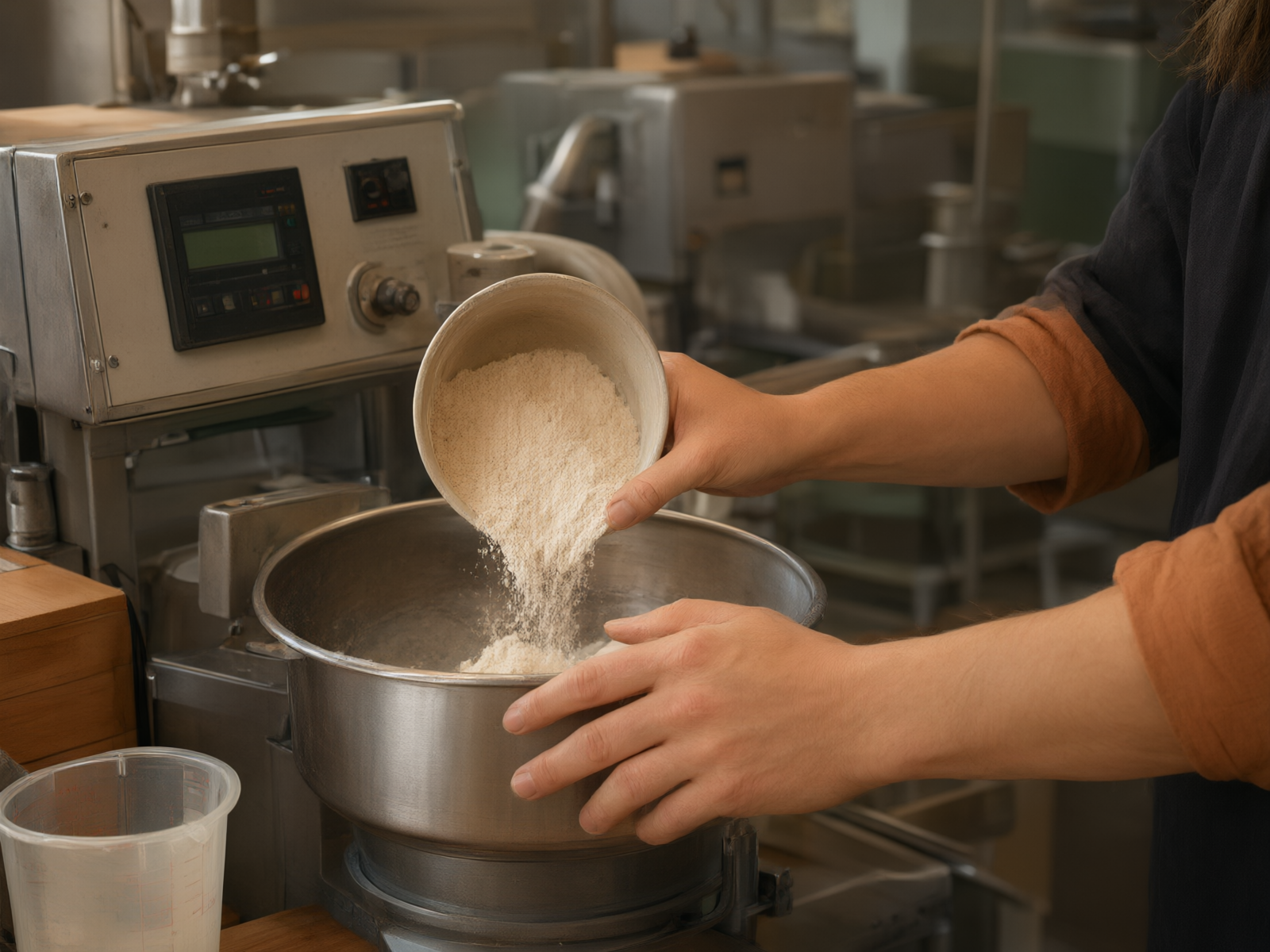
Curing is the core process step. Konjac gel must undergo a curing reaction under specific temperature and time conditions. Temperatures that are too low result in a hard texture, while temperatures that are too high cause nutrient loss. Our production line uses constant-temperature water bath curing with temperature control accuracy within ±2°C, ensuring consistent quality for every batch. With a daily capacity of 30 tons, the system supports seamless switching from small-batch trials to large-scale mass production.
Packaging Customization: Brand Integration from Inner Bag to Outer Box
Packaging is the first point of contact between products and consumers, serving as a key driver of brand differentiation. Konjac instant rice packaging typically comes in two formats: an inner bag with an outer box or a stand-up pouch. Inner bag materials must be food-grade and offer strong barrier properties to prevent moisture and oxygen from compromising shelf life.
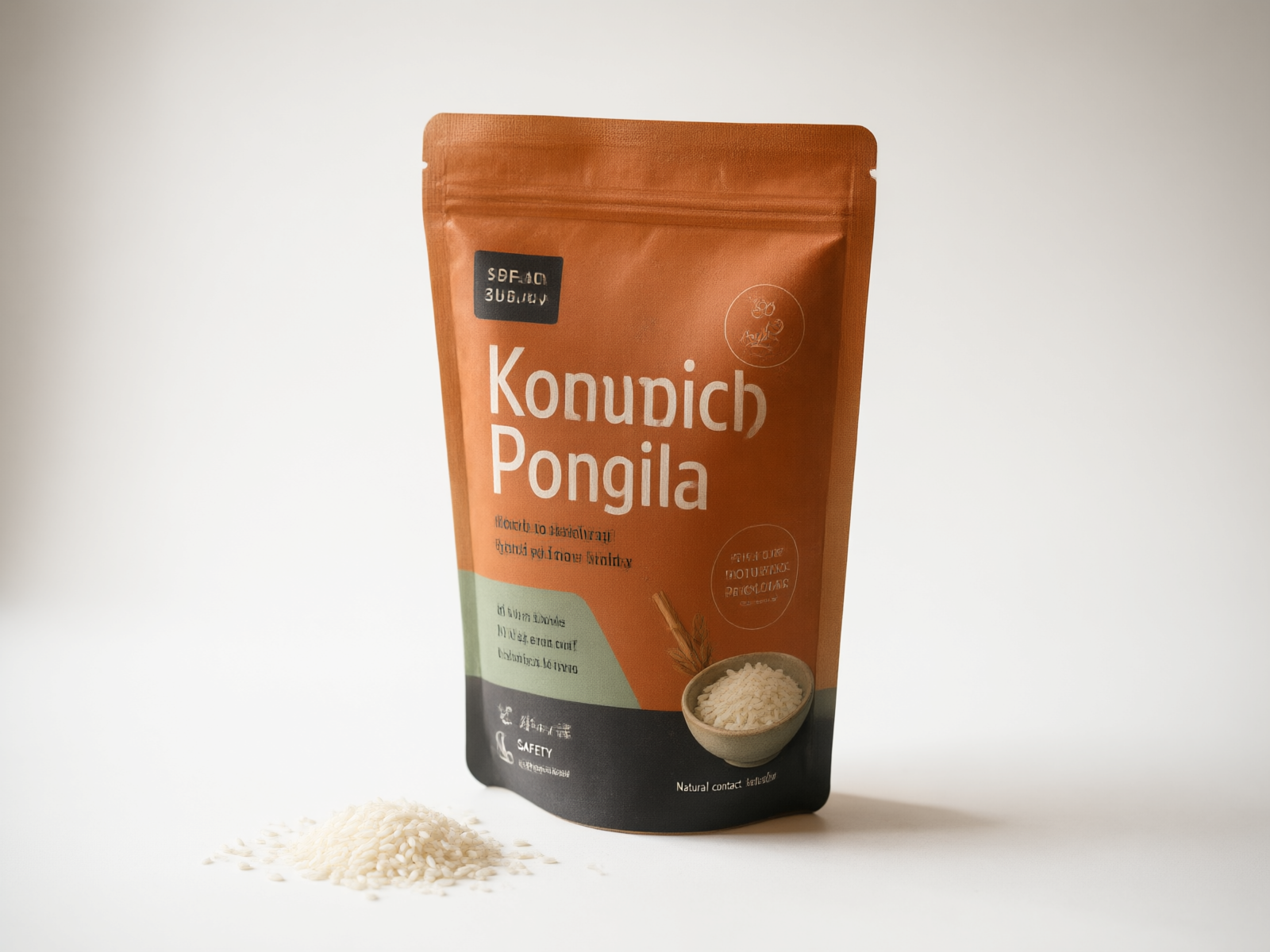
Packaging customization involves three levels: material selection, visual design, and specification configuration. At the material level, composite films are chosen based on shelf-life targets: regular versions offer 12-month months of shelf life, while high-barrier versions extend up to 18 months. At the visual design level, suppliers provide brand logos, color palettes, and copy content; the design team handles layout and die-cutting. At the specification level, single-bag weight, bags per box, and boxes per carton are defined according to target channels to align with supermarket shelving, e-commerce warehouse displays, and logistics requirements.
From design finalization to packaging material delivery, the cycle typically takes 15 to 20 days. Suppliers must confirm label compliance requirements for target markets in advance, including nutrition facts format, allergen labeling, and production batch number standards.
Compliance Delivery: From Quality Inspection to Cross-border Export
Before products leave the factory, three quality checks must be completed: sensory, physicochemical, and microbiological. Sensory inspection evaluates appearance, odor, and taste against standards. Physicochemical testing measures moisture, protein, carbohydrates, and other indicators. Microbiological testing verifies that total colony count, coliforms, pathogens, and other parameters meet food safety requirements.

Cross-border export requires market access certification for target markets. Different countries and regions have varying regulatory requirements for imported food. Common certifications include FDA registration, HACCP system certification, ISO2000 certification, and Halal certification. Suppliers must prepare the necessary certification documents and test reports for their target markets in advance.
Our factory holds multiple international certifications and is qualified for cross-border exports. From order confirmation to delivery, the standard timeline is 30–45 days, covering production, quality inspection, customs clearance, and logistics. Suppliers can track order status in real time via WhatsApp, WeChat, and other channels.
Konjac instant rice OEM/ODM customization covers the full journey from formula to finished product. Formula R&D drives competitiveness, process validation ensures quality stability, packaging customization enables brand differentiation, and compliance delivery secures market access. These four stages are interconnected, requiring suppliers and manufacturers to align on needs and clarify standards early. For suppliers aiming to enter the keto food market, partnering with a source factory that has R&D capabilities and export qualifications is key to reducing trial costs and accelerating time-to-market.